CHECKOUT | SENFF
15.3% increase in conversion by pulling credit card from the bank's vault.
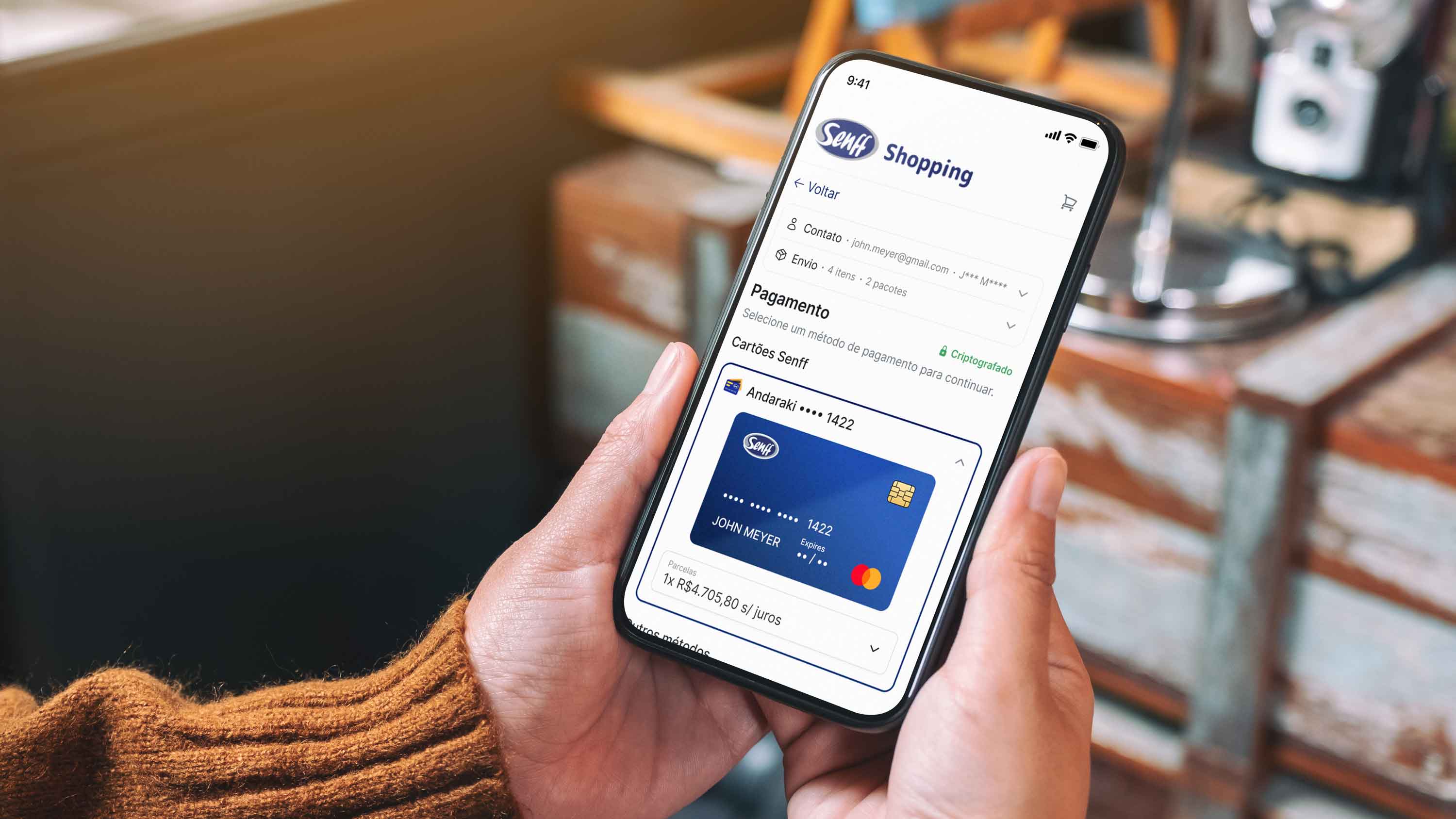
Banco Senff runs its own marketplace, with special conditions for customers paying with a Senff-issued card. But those are single-use virtual cards from the bank app, so every purchase meant leaving checkout to generate a card and copy-paste its data back friction that cost sales. Ollie made the card available directly in checkout, no app-switching or copy-paste.
Senff Shopping lives inside the Senff bank app, and 70% of the visitors already have an active session in the App — the bank knows who they are and which cards they hold. But the marketplace could not load these cards. Customers were forced to go back to the app to get the card number, then back to checkout and repeat this process until the card data was fully copied.Shoppers were faced with a tedious and error-prone task, which resulted in frustrated customers and loss in sales.
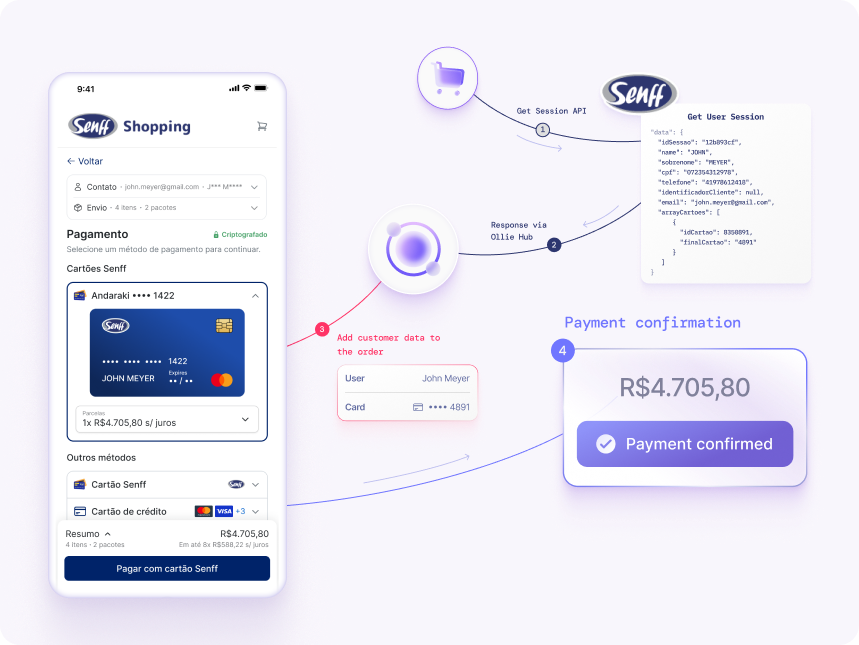
Senff's ideal checkout — a customer with an active session in the App does not need to re-authenticate in the store. The identity and the cards that already exist in the bank app should also be available to use in the checkout.
They've built an identity-and-card import flow running on a token Senff issues. The customer reaches checkout already identified, with their cards already listed, they pick a card and place the order. No personal data re-entered, no card number typed.
Functionally, it's a transparent wallet — comparable to Apple Pay or Nubank Pay, except the customer never leaves Senff Shopping's own interface. The underlying protocol doesn't care who's on the other end: any card issuer, loyalty program, or wallet that already knows the customer could occupy the same slot.
15.3%
overall increase
in conversion rate
2x
conversion by users
coming from the app